AI assistants report
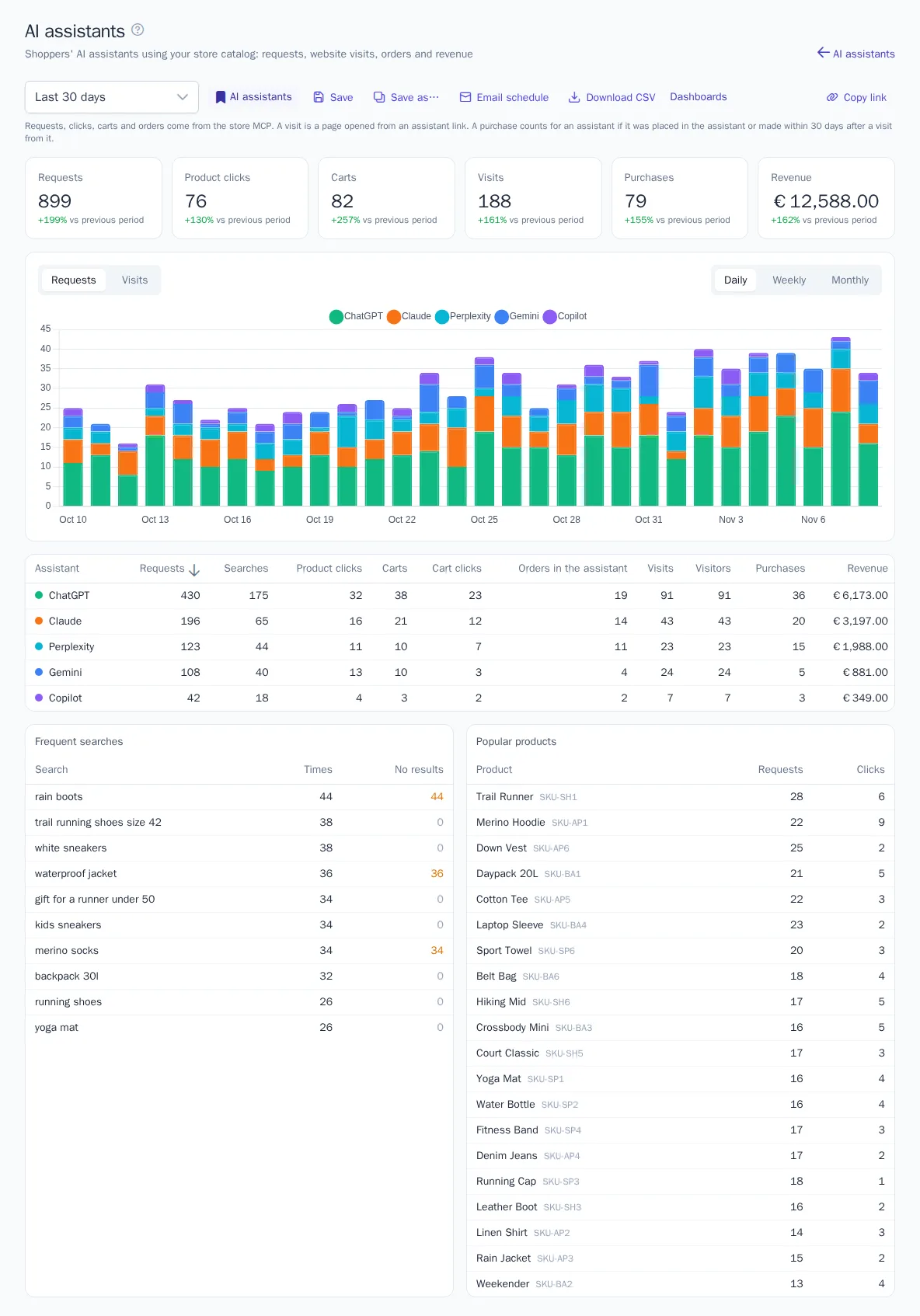
The report shows how shoppers' AI assistants — ChatGPT, Claude, Perplexity, Gemini, Copilot — use your shop's catalog and what the shop gets from it: how many requests, website clicks, carts, orders, and how much revenue each assistant accounts for, what shoppers search for, and which products they ask about.
Open Analytics → AI assistants and click New report. The report is available on the Growth plan, like the shoppers' AI assistants themselves. See Plans. The period, report link, saving, CSV, dashboard cards, and email delivery work the same way as in other reports. See Common to all reports.
Metrics
| Metric | What counts |
|---|---|
| Requests | All assistant calls to the shop MCP: search, product cards, recommendations, questions, carts, orders |
| Searches | Assistants' search queries in the catalog |
| Product clicks | Shoppers' clicks on assistant links to product pages |
| Carts, Cart clicks | Carts the assistant put together and clicks on their links to the website |
| Orders in the assistant | Orders placed right in the conversation through the store MCP |
| Visits, Visitors | Website visits from assistant links and the distinct clients who made them |
| Purchases, Revenue | Orders credited to the assistant and their total. See below |
The cards at the top show the period total and the change from the previous period of the same length. The chart shows requests or visits by assistant per day, week, or month. You can sort the table by any column.
How purchases are credited
A purchase is credited to an assistant if:
- the order was placed in the assistant: the shop plugin sends it with the assistant's tag;
- or the shopper placed the order no later than 30 days after their last visit to the website from that assistant's link.
An order from the assistant isn't credited a second time by a click. The purchase event and amount are the same as in the Revenue report; until a purchase event is chosen, the report shows requests, clicks, and visits without purchases.
A visit is a page opened from an assistant link: its address has the utm_medium=ai_assistant tag. Later pages of the same visit don't count as new visits. In traffic sources, these visits go to the AI assistants channel.
Frequent searches and popular products
Frequent searches are the 20 most frequent assistant search queries for the period. The No results column shows how many times the search found nothing: these are products shoppers look for that aren't in the catalog or are out of stock. It's worth covering such queries with your range or with search synonyms.
Popular products are the 20 products the assistants asked about most often (product card, question, similar products), with the number of clicks to the website.
API
The same report is available in the API: POST /api/v1/analytics/assistants with a secret key. See API keys.